Notes
Historical Fiction About Ordinary People: A Reading Guide

Last Updated: November 10, 2026
Quick Summary
Historical fiction about ordinary people follows workers, families and households rather than kings and generals, using their daily routines and personal stakes to reveal how past societies really functioned. This guide organises such novels by period, region and trade so readers can find the lives that interest them most.
- Ordinary lives leave few documents, so novelists must infer, which often produces more believable fiction.
- The guide sorts titles along three axes: period, region, and trade or household role.
- Shipwrights, caulkers, rope-makers and sailmakers are examples of maritime workers whose names rarely survive.
- Check whether a novel separates documented physical and legal detail from invented character interiority.
- Some war and famine novels depict injury, child loss and sexual violence, so check content before reading.
Table of Contents
- Why Ordinary Lives Make Better Historical Fiction
- How This Guide Is Organised: By Period, Region and Trade
- Historical Fiction About Working-Class People in the Ancient and Medieval World
- Tudor-Era Lives Beyond Kings and Queens
- Historical Fiction About Shipwrights and Maritime Trades
- Historical Fiction About Everyday Life During Wars and Upheavals
- Historical Fiction About Everyday Life: Family, Work and Domestic Routine
- Romance Among Ordinary People in Historical Fiction
- Historical Accuracy, Research Notes and Reading Experience
- Choosing Your Next Read and Where to Find the Novels
- Frequently Asked Questions
Why Ordinary Lives Make Better Historical Fiction
Historical fiction about ordinary people is the corner of the genre where the most interesting history often hides. Kings and generals leave long paper trails, but the miller, the clerk and the shipwright leave almost nothing, and that silence is exactly what good novelists can work with.
The appeal of historical fiction about ordinary people is simple. A reader who has never met a Tudor monarch can still recognise a worried father, a tired worker or a neighbour caught between loyalty and survival. Those emotions travel across centuries far more reliably than court intrigue does. When the stakes are personal, the history feels less like a lecture and more like a life.
There is a practical side too. Ordinary lives are rarely documented in detail, so research for historical fiction about ordinary people becomes a form of detective work. Gaps in the record push the writer toward inference, and inference, handled carefully, produces richer and more believable fiction than a parade of famous names.
How This Guide Is Organised: By Period, Region and Trade
Most lists of historical fiction are organised by popularity or by publication date, which makes it hard to find the historical fiction about ordinary people you actually want to read.
The first axis is period. Sections move from the ancient and medieval worlds, through Tudor England, into early modern and wartime settings. Within each period, the question is what daily life looked like for people without power: whether they worked in fields, workshops, households, ports, or armies, and how much of their world was governed by guild rules, debt, or religious obligation.
The second axis is region. A labourer in a Mediterranean port faced different constraints from a rural family in northern England, even in the same century. Where a setting is specific, the guide notes the regional features that shape daily routine, such as seasonal trade winds, local building materials, or the role of a particular institution.
The third axis is trade and household role. A miller, a caulker, a rope-maker, a domestic servant and a clerk each live through a different working day, and novels about them tend to foreground different textures: noise and dust in one case, long hours indoors and paperwork in another. Grouping by trade makes it easier to pick a book whose central work you find interesting, even if you are less drawn to its period.
To use the structure well, pick the axis that matches your reading mood first. If you want a quiet domestic story, start with household roles. If you want a sense of how a particular city functioned, start with region. If you want a grounded picture of a historical turning point, start with period and then look for the trade that suffered most.
Historical Fiction About Working-Class People in the Ancient and Medieval World
Working-class characters in the ancient and medieval world tend to appear as background, which makes historical fiction about ordinary people in this era harder but more rewarding to write. Their routines, debts and small rebellions reveal how societies actually functioned beneath official law and religion.
Look for novels that place a labourer, a craftsperson or a household servant at the centre of the plot. These books often show the physical texture of work: the smell of a tannery, the rhythm of a mill, the long hours of seasonal labour. Such details give ancient and medieval settings a grounded feeling that royal court dramas rarely achieve.
Tudor-Era Lives Beyond Kings and Queens
Tudor England is one of the most written-about periods in English history, yet most of that writing concerns the court. Novels that step outside the palace walls offer a different view of the same century.
A family trying to keep a workshop going through a change in religious policy faces choices that feel immediate, even five centuries later.
Historical Fiction About Shipwrights and Maritime Trades
Maritime history is full of skilled workers whose names rarely survive, and historical fiction about ordinary people often finds its richest material among them. Shipwrights, caulkers, rope-makers and sailmakers built and maintained the vessels that made long-distance trade possible, yet most readers have never followed one through a working day.
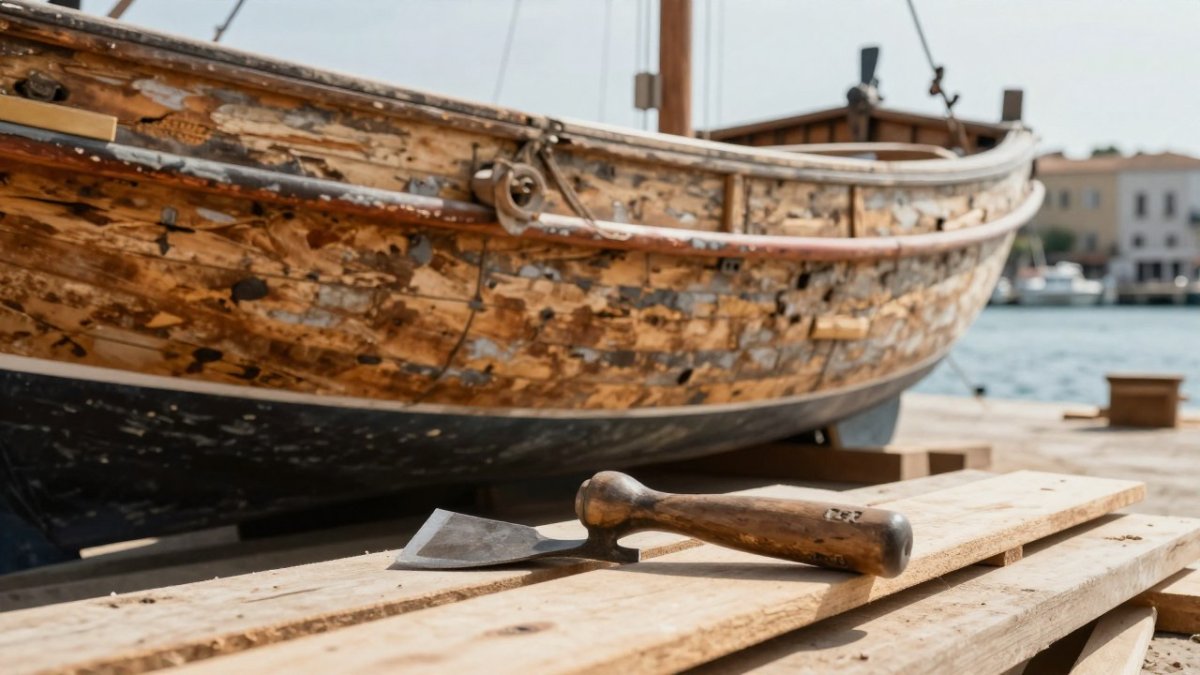
The best novels in this area show the craft itself: the selection of timber, the fitting of planks, the danger of working on unstable hulls. A recurring tension is the gap between the prestige of the ship's captain and the unglamorous labour that kept the vessel afloat. This is also where a Genoese or Mediterranean setting gives the reader a fresh angle, since the city's maritime culture produced generations of skilled trades.
The trades that built and maintained these vessels, and the skills each one demanded, are summarised below.
| Trade | Core work | Source of tension |
|---|---|---|
| Shipwrights | Selecting timber and fitting planks | Unstable hulls and dangerous working conditions |
| Caulkers | Sealing seams to keep vessels watertight | Unglamorous labour beneath the captain's prestige |
| Rope-makers | Producing the rigging that held sails | Skilled work whose names rarely survive |
| Sailmakers | Cutting and sewing canvas | Craft largely invisible to most readers |
Historical Fiction About Everyday Life During Wars and Upheavals
War is usually told from the front line or from the command tent. Novels about ordinary people during conflict look instead at rationing, requisitioned homes, lost sons and the bureaucrats who kept supply lines moving.
A clerk processing ration books or a woman running a household alone during a siege can carry as much narrative weight as any soldier. These stories tend to be quieter and more reflective, and they often leave the reader with a clearer sense of what a conflict cost the people who were not fighting it.
Historical Fiction About Everyday Life: Family, Work and Domestic Routine
Family life is the thread that ties most historical fiction about ordinary people together. Meals, chores, arguments over money and the small rituals of a household reveal far more about a period than a battle does.
When choosing a book in this category, consider whether you want domestic intimacy or a wider social frame. Some novels stay tightly inside one home across many years; others follow several households through the same event. Both approaches work, and both show how work and family obligations shaped what people could and could not do.
Romance Among Ordinary People in Historical Fiction
Love stories between ordinary people face different obstacles from those of aristocratic romance. Money, social class, apprenticeship rules, and the expectations of a tight-knit community all shape whether a relationship can survive.
The most satisfying romances in this genre are rooted in circumstance. Two people fall in love in the middle of a working day, or across a shared bench, and the wider world makes the path difficult. The emotional payoff comes from seeing how much they are willing to risk for each other.
Historical Accuracy, Research Notes and Reading Experience
Readers who have been let down by historical fiction about ordinary people marketed as "meticulously researched" are right to be wary. Every work of historical fiction invents something: a conversation, a motive, an event the record never mentions. The useful question is not whether a novel invents, but where it invents and whether those inventions sit comfortably against what is documented about the period.
A practical way to judge this is to separate three layers. The first is the physical world: tools, food, clothing, building materials, and the price or availability of common goods. Novels that get these right usually describe them in plain, specific terms rather than with vague period atmosphere. The second is the legal and institutional frame: who could own property, what a contract or apprenticeship bound a person to, how a wage was paid, and what courts could and could not do. The third is the inner life of the characters, which is where invention is expected and where a novelist's judgement matters most.
Several signs suggest a novel has done its groundwork. Some authors include a historical note that marks where evidence ends and speculation begins. Bibliographies that cite primary sources such as account books, parish registers, guild records or court depositions are a stronger signal than a list of general histories. For a curated selection, see our list of historically rigorous novels for history buffs. Specific, unglamorous detail, such as the wrong kind of cloth for a season or a tool that did not yet exist, is often a sign of careful reading.
For reading experience, the most useful thing a reviewer or publisher can offer is an honest note on tone and intensity. Novels set during war, famine, or industrial poverty often depict injury, child loss, sexual violence, or the slow grind of hunger, and these can be heavy even when handled with restraint. A reader choosing between a quiet domestic novel and a harrowing siege story should know that before opening the book. Where a book is part of a triptych or motif-based sequence, check whether the later volumes assume knowledge of the earlier ones; standalone novels avoid that problem entirely.
For readers who want more context on the period itself, a companion guide to daily life in Roman times can help you recognise the everyday details that good novelists tend to get right. Our notes on finding historical fiction without tired clichés also explain how to spot books that lean on stereotypes instead of research.
Choosing Your Next Read and Where to Find the Novels
Start with the setting that interests you most, then choose between a standalone novel and a multi-volume work. Standalone books are the simplest way to begin, while triptychs suit readers who want a longer immersion in one motif.
Pricing varies by edition, format and retailer, so check the current listing for the book you choose on the Alessandro Catorcini website for current details. You can also see where to buy historical fiction novels online. If you want to follow new releases directly, the readers' list on the Alessandro Catorcini site is the best place to sign up.
Frequently Asked Questions
What are the best historical fiction books about ordinary people?
The strongest titles in this genre focus on a single trade, household or community rather than a court or battlefield. Look for novels where the protagonist's daily work, money worries and family obligations drive the plot. Standalone novels are a good starting point because they let you judge the author's approach without committing to a series. Read the author's notes or historical afterword where available, since they show which details were documented and which were imagined. Pick the period and setting that interest you most, then choose the book whose central character's job matches your curiosity.
Which historical novels focus on working-class characters?
Working-class historical fiction centres on people who earned their living with their hands: millers, miners, dockworkers, weavers and shipwrights. These novels show how labour shaped marriage, health, debt and community. When comparing titles, check whether the work itself is described in concrete, technical detail, because that is often the clearest sign that the author researched the trade. Books of this kind reward readers who want to understand how the economy of an era touched individual households.
Are there historical fiction books about everyday life rather than royalty or war?
Yes. A growing body of historical fiction sets its stories in ordinary households, markets, workshops and villages, with royalty and battles kept at the edges. Everyday-life novels tend to be quieter, built around routine, seasons, illness and neighbourly relations. If you want this kind of book, search for descriptions that mention a trade, a town or a family rather than a famous event. Many of these titles still reference major historical moments, but they treat them as background to daily existence.
What historical fiction books feature ordinary people in Tudor times?
Tudor-era fiction is often dominated by monarchs and court intrigue, so novels about ordinary people in that period stand out. Look for stories set in London's trades, in provincial towns, or among farmers and labourers during the upheavals of the Reformation. These books usually trace how religious change and taxation affected local families. Check the author's notes to see which sources they drew on, such as parish records, guild documents or household accounts.
Can you recommend historical fiction about ordinary people with romance?
Romance in this genre is usually embedded in working life. A love story might develop between two people who share a workshop, a ship, a mill or a street, and the obstacles are often economic or social rather than dramatic. When selecting a novel, consider whether the romance drives the plot or sits alongside the protagonist's work and family duties. Stories where the relationship is shaped by class, money and duty tend to feel more historically grounded than those where the couple's feelings exist outside their circumstances.
What makes a historical novel about ordinary people compelling?
The most compelling examples give ordinary lives the same narrative weight as major events. They build tension from small choices: whether to take a risky job, how to pay a debt, whether to leave home. Specific sensory detail about work, food, clothing and weather helps the reader feel the period. Strong characters also make difficult decisions with visible consequences, so the reader understands what those choices cost the people involved.
Are historical fiction books about ordinary people based on real events?
Many are inspired by real events or real occupations, but few are strict retellings. Authors typically combine documented facts, such as trade practices, shipping routes or wartime conditions, with invented characters who move through those circumstances. To judge how closely a novel follows the record, read the author's historical note, which should separate verified background from invention. A well-researched novel will be explicit about where it bends the facts for storytelling.