Notes
Understanding Daily Life in Roman Times: A Complete Guide
Last Updated: November 5, 2026
Quick Summary
Understanding daily life in Roman times means abandoning the idea of a single Roman experience, because daily life in Roman times varied enormously by wealth, region, and status. An enslaved worker in an apartment block and a villa owner in the provinces shared a language and a legal system, but almost nothing else.
- Most Romans rose at first light because oil lamps were smoky and candles were a luxury.
- The Roman hour was not fixed: daylight was divided into twelve equal horae, so summer hours were longer.
- Wealthy clients gathered before dawn for the salutatio to greet their patron and receive a small sportula.
- The poor rented single rooms in multi-storey insulae with no kitchen and no private bath.
- Public baths offered cold, warm, and hot rooms, and bathing was as much social as hygienic.
Table of Contents
- Why Daily Life in Roman Times Was Never One Story
- A Roman Day From Dawn to Dusk
- Daily Life in Ancient Rome for the Poor
- Daily Life in Ancient Rome for the Rich
- Daily Life of an Ancient Roman Girl
- Daily Life in Roman Britain: Life on the Edge of Empire
- Health, Sanitation, and the Public Baths
- What the Evidence Can and Cannot Tell Us
- Step Into the Overlooked Corners of Roman Life
- Frequently Asked Questions
Why Daily Life in Roman Times Was Never One Story
Understanding daily life in Roman times means abandoning the idea of a single Roman experience. A senator in Rome and a potter in Roman Britain inhabited worlds as different as their modern descendants would recognise. This guide examines the ordinary routines, households, and hardships that shaped existence across the empire.
The throughline here is simple: daily life in Roman times varied enormously by wealth, region, and status. An enslaved worker in an apartment block and a villa owner in the provinces shared a language and a legal system, but almost nothing else. Below, we'll show you exactly how those differences played out, from dawn routines to the public baths.
A Roman Day From Dawn to Dusk
Most Romans rose at first light, since artificial lighting was expensive and unreliable. Oil lamps burned olive oil and gave off a smoky, flickering glow; candles were a luxury. The natural day therefore set the rhythm for almost everyone, and the length of that day changed dramatically with the seasons, a winter working day in Rome might last only eight or nine hours of usable light, while a summer day stretched far longer.
The Roman hour was not a fixed sixty minutes. Daylight was divided into twelve equal horae, so a summer hour was longer than a winter one. Sundials and water clocks existed, but most people told time by the sun, by market bells, or by the routines of their household. This is one reason why Roman schedules feel so alien to modern readers: the day itself was elastic.
The Morning: Clients, Business, and the Salutatio
For anyone with status, the morning began with the salutatio, the formal greeting ceremony. Clients gathered at the house of their patron before dawn to pay their respects, receive a small handout (sportula), and ask for favours or legal help. The poet Martial complained bitterly about having to trudge across Rome at dawn to flatter a patron, and Juvenal mocked the humiliating scramble for a dinner invitation. For the patron, the salutatio was a display of power; for the client, it was a daily obligation that could consume hours.
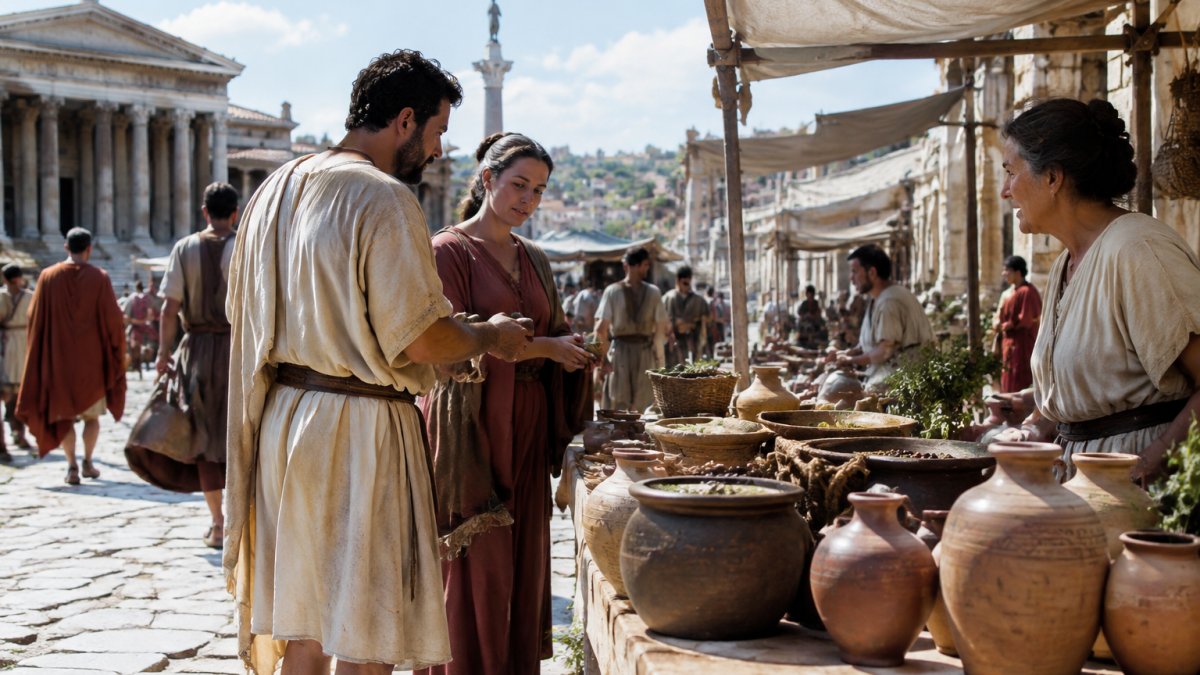
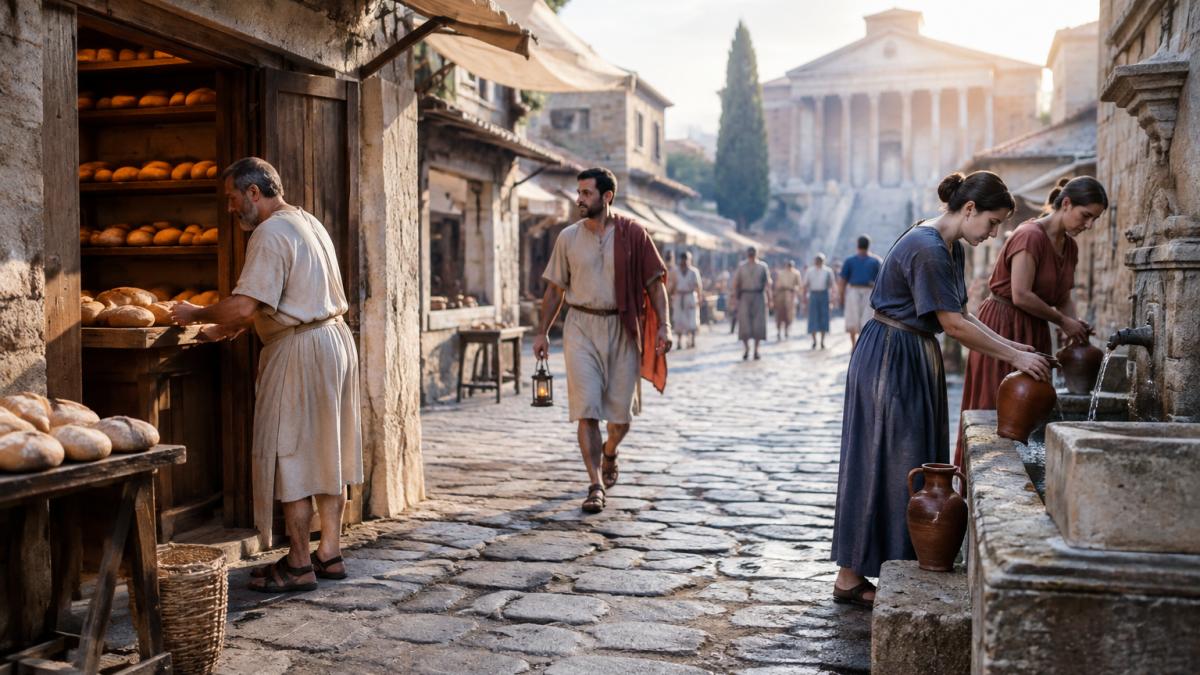
Ordinary workers had no such ritual. Bakers, fullers, and market traders opened before sunrise. The baker's oven had to be hot by the time customers arrived, so the workday started in the small hours. Artisans, potters, metalworkers, shoemakers, worked by daylight in workshops that often doubled as shopfronts. Scribes and clerks kept records for households, officials, and businesses, and their work was tied to the availability of light and the needs of their employer rather than to a fixed shift.
The Afternoon: Baths, Leisure, and the Cena
By midday, many Romans paused for a light lunch (prandium) and then headed to the baths in the early afternoon. The bathing ritual, exercise, oiling, scraping with a strigil, and moving through cold, warm, and hot rooms, could take a couple of hours and was as much social as hygienic. For the wealthy, the afternoon might also include a visit to the forum, a poetry reading, or a game of ball. The main meal, the cena, came in the late afternoon or early evening; for the elite it could stretch for hours across multiple courses, while for ordinary Romans it was a simpler affair of bread, olives, vegetables, and legumes.
How Class and Season Changed the Day
A senator's day was structured around patronage, politics, and leisure; a potter's day was structured around the kiln and the market. An enslaved worker's day was structured around whatever the household required, often from before dawn until after dark, with no salutatio and no afternoon at the baths. Seasonality cut across all of this: agricultural work followed planting and harvest, religious festivals interrupted normal business, and the short winter days compressed everything. A common mistake is imagining a single Roman timetable. In practice, daily life in Roman times was a patchwork of schedules shaped by status, trade, and the turning year.
Watch out: the popular image of a leisurely Roman afternoon at the baths applies mainly to the wealthy and to urban residents; for most labourers and the enslaved, the afternoon was simply more work.
Roman routines followed the sun and shifted with status, so here is how the main parts of the day fit together.
| Time of day | Activity | Who took part |
|---|---|---|
| Before dawn | Clients gathered for the salutatio | Clients and patrons |
| Before sunrise | Bakers, fullers, and market traders opened | Ordinary workers |
| Daylight | Artisans worked in workshops doubling as shopfronts | Potters, metalworkers, shoemakers |
| Midday | Light lunch called the prandium | Many Romans |
| Early afternoon | Bathing ritual with strigil and cold, warm, hot rooms | Many Romans, mainly the wealthy |
| Late afternoon or early evening | Main meal, the cena | Elite and ordinary Romans |
Daily Life in Ancient Rome for the Poor
Daily life in Ancient Rome for the poor centred on crowded apartment buildings, shared facilities, and constant uncertainty. Many families rented a single room in a multi-storey block, an insula, with no kitchen and no private bath. Water came from public fountains, meals were bought from street vendors or cooked over a small brazier, and rent and food consumed most of a household's income.
Housing: Insulae, Rents, and the Risks of Tall Buildings
An insula could rise four, five, or even more storeys, with shops at street level and cramped rooms above. The jurist Ulpian and other legal writers discuss upper-floor tenants, and the satirist Juvenal describes the constant threat of fire and collapse. Timber floors, open hearths, and poorly maintained walls made these buildings dangerous; the Emperor Augustus set limits on building height after repeated collapses, and later emperors tightened the rules further. Tenants accepted the risk because they had no alternative, the alternative was sleeping in the street.
Rent was a heavy burden. Our evidence for actual prices is fragmentary, and figures for rents and wages vary considerably across sources and periods. A labourer's daily wage might be a few sesterces, so rent alone could swallow a large share of income. Many families doubled up, sublet, or took in lodgers.
Water, Food, and the Daily Struggle
Public fountains supplied most of the city's water, and the poor carried it home in jars and buckets. The great aqueducts fed public baths and fountains, but private piped water was a luxury for the wealthy. Sanitation was uneven: public latrines existed, but chamber pots were emptied into the street or into drains, and disease spread easily in crowded districts.
Food was simple and bought daily. Bread was the staple, supplemented by olives, onions, legumes, and cheap fish; meat was an occasional luxury. Street vendors sold hot food, and bakeries sold loaves that could be eaten with oil or cheese. A household's budget was dominated by food and rent, leaving little for anything else, which is why access to baths, education, and leisure was sharply limited for the poor.
Watch out: the biggest danger was fire and collapse in these timber-framed blocks, a risk tenants accepted because they had no alternative. Understanding this housing reality explains far more about Roman city life than any account of the elite.
Daily Life in Ancient Rome for the Rich
Daily life in Ancient Rome for the rich unfolded in a domus or villa with courtyards, fountains, mosaics, and a household of enslaved staff. The wealthy enjoyed private baths, gardens, and dining rooms designed for entertaining. Their mornings involved patronage and politics; their afternoons, the baths and leisure. The contrast with a rented room could hardly be starker.
Daily Life of an Ancient Roman Girl
A girl's life depended almost entirely on her family's status. In wealthier households, she might receive some education at home before an early marriage arranged by her parents. In poorer families, she would work alongside her mother from childhood. Girls had limited legal independence, and their lives were shaped by family roles and social expectations rather than personal choice. A reader gripped by ordinary Roman women's lives may want this novel told entirely through a notary's trial record of a Roman midwife.
Daily Life in Roman Britain: Life on the Edge of Empire
Daily life in Roman Britain combined imported Roman customs with local traditions. Towns like Londinium developed forums, baths, and villas, but much of the population still lived in roundhouses and worked the land. Soldiers, traders, and artisans formed a frontier society where Roman and native practices mingled, and where the weather and distance from Rome shaped everything. A reader moved by life on the empire's edges may want the French edition of the shield triptych covering Rome's obscure war frontiers.
Health, Sanitation, and the Public Baths
Public baths were central to Roman hygiene and social life, offering cold, warm, and hot rooms plus exercise areas. Yet sanitation was uneven: cities had drains and public latrines, but disease and contaminated water remained constant threats. Bathing was as much a social ritual as a health practice, and for many Romans it was the highlight of the afternoon. After reading about Roman women and healing, readers can turn to the French edition of the same midwife novel for a fictional deep dive.
What the Evidence Can and Cannot Tell Us
Our picture of daily life in Roman times rests on fragments: excavated houses, graffiti, mosaics, household shrines, and written records kept by the literate few. These sources skew toward the wealthy and the male. Ordinary Romans, women, children, and enslaved people left fewer traces, so any account must be honest about what the evidence cannot show. Readers fascinated by how evidence shapes our picture of Rome's soldiers and artisans can browse the Italian edition of the shield triptych.
Step Into the Overlooked Corners of Roman Life
The grand narratives of emperors and battles leave out the bakers, shipwrights, and clerks who actually held the empire together. That is exactly the territory Alessandro Catorcini writes into: standalone novels and triptychs built around forgotten figures, bound by a shared motif rather than a single plot. You can explore the shield triptych and its lesser-known war frontiers, or meet a Roman midwife through a notary's trial record in The Second Woman. Join the readers' list to receive early copies, historical context behind the stories, and a free ebook of The Stranger in the Cell. Get started with Alessandro Catorcini and read history from the ground up.
Frequently Asked Questions
What was daily life like in ancient Rome for an ordinary person?
Most ordinary Romans rose at dawn, ate a light breakfast of bread and water or wine, and worked until midday, when many took a break for a cold lunch and a rest. Afternoons were for errands, the public baths, or leisure. Dinner, the main meal, came in the late afternoon or evening. Housing, food, and work varied enormously by social class, so a shopkeeper's day looked nothing like a senator's.
How did daily life in ancient Rome for the rich differ from the poor?
Wealthy Romans lived in spacious villas or townhouses with mosaics, fountains, and dedicated kitchens, and they relied on enslaved people for cooking, cleaning, and childcare. Poor Romans crowded into multi-story apartment buildings called insulae, often without private kitchens or running water, and used public baths and street food. Both groups shared the same city, but their routines, diets, and access to amenities were worlds apart.
What was daily life of an ancient Roman girl like?
A Roman girl's childhood depended heavily on her family's status. Girls from poorer households often helped with chores, water carrying, and younger siblings from an early age. Wealthier girls received some education in reading and writing before marriage, which could come as early as the mid-teens. Most girls were expected to marry and manage a household, though enslaved girls faced very different, harsher conditions with no legal protection.
What did people eat in ancient Rome?
The Roman diet centered on bread, olive oil, and wine, supplemented by vegetables, legumes, cheese, and eggs. Wealthy households enjoyed multi-course dinners with meat, fish, and imported delicacies, while poorer families relied on porridge, coarse bread, and whatever they could afford. Street vendors sold hot food to those without kitchens. Breakfast was usually minimal, and the main meal, cena, was eaten in the afternoon or evening.
How was daily life in Roman Britain different from life in Rome itself?
Roman Britain was a frontier province, so daily life blended Roman customs with local Celtic traditions. Towns like Londinium had baths, forums, and Roman-style houses, but many people still lived in roundhouses in the countryside. The climate was colder and wetter, agriculture differed, and military presence shaped local economies. For most inhabitants, life was more rural and less luxurious than in the capital.
Where did ordinary Romans live?
Most ordinary Romans lived in insulae, multi-story apartment buildings that could be several floors high. Ground floors often housed shops, with living quarters above. These buildings were prone to fire, collapse, and overcrowding, and lacked private kitchens or baths for most residents. Wealthier families lived in domus townhouses or countryside villas with courtyards, gardens, and private amenities.